
Easter is either the most important event in human history or the greatest hoax ever told.
There is no middle ground. No comfortable in-between. A man either rose from the dead or he didn’t. And if he did, nothing about your life, your death, or your future can stay the same.
If you’re searching for an Easter church service in Denver this year, or just honestly asking what does Easter mean beyond the eggs and the brunch, you deserve a straight answer. So let’s go get one.
Sources referenced: Gary Habermas and Michael Licona, The Case for the Resurrection of Jesus (2004). Gerd Ludemann, What Really Happened to Jesus (1995). Scripture quotations from the Christian Standard Bible (CSB).
Why Easter Is More Than a Holiday
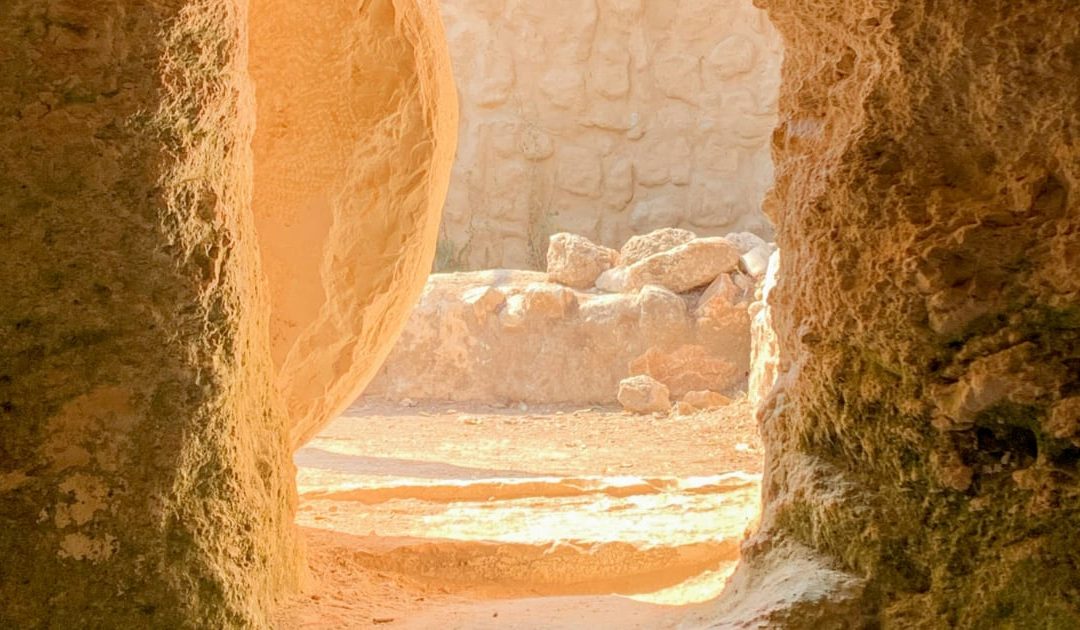
Most people treat Easter like Christmas with better weather. A family gathering. Maybe a church service. Definitely some chocolate. Then Monday comes and life goes on unchanged. But that’s only possible if the resurrection isn’t true. If Jesus actually came back from the dead, Easter isn’t a holiday. It’s the hinge of all of human history. Every claim Jesus made about himself, about forgiveness, about eternal life, about who God is, either stands or falls on whether or not that tomb was empty on Sunday morning. The Apostle Paul was blunt about it. He wrote that if Christ was not raised from the dead, the entire Christian faith is worthless. Believers are still in their sins. Everyone who died trusting Jesus died believing a lie. (1 Corinthians 15:17-18) Paul wasn’t trying to inspire anyone with that. He was making a logical argument. The resurrection is the load-bearing wall of the Christian faith. Remove it and the whole structure comes down. So the question isn’t whether Easter matters. The question is whether it’s true.What Actually Happened on Easter Morning
Skeptics have long argued that the resurrection is a myth. A story that developed over time, told and retold by grieving followers until it became something larger than the facts. It’s a reasonable objection. But it doesn’t hold up when you actually examine the evidence. The resurrection of Jesus explained through a historical lens starts with the minimal facts case, developed by Dr. Gary Habermas, the leading resurrection scholar in the world. His case builds from four points accepted by the overwhelming majority of scholars, including non-Christian historians. He calls them the four E’s: Execution, Early Accounts, Empty Tomb, and Eyewitnesses. Execution. Before anything else, you need a body. Some have theorized that Jesus simply survived the crucifixion and the appearances of a risen Jesus were actually a badly injured but still-living man. That theory doesn’t survive contact with what we know about Roman crucifixion. The Romans designed crucifixion to guarantee death. A victim was nailed to a cross and forced to push up on their impaled feet just to breathe. No one lasted more than 24 hours. Soldiers would break the legs of the crucified to accelerate death by suffocation. To confirm death, they pierced the victim’s side, driving through the rib cage and puncturing the lungs and heart. Five non-biblical sources confirm Jesus was crucified and died under Pontius Pilate. Josephus, a Jewish historian. Tacitus, a Roman historian. Mara Bar Serapion. Lucian. And even the Talmud, the central text of Rabbinic Judaism, with no reason to do Jesus any favors, confirms his crucifixion. Atheist New Testament scholar Gerd Ludemann of Vanderbilt University has stated plainly: “Jesus’ death as a consequence of crucifixion is indisputable.” (Gerd Ludemann, What Really Happened to Jesus, 1995) Jesus died. That’s not in dispute. Early Accounts. Myths need time to develop. The resurrection account did not have that time. In 1 Corinthians 15, Paul passes on what historians recognize as the earliest creed of the Christian church. He writes that Christ died, was buried, and was raised on the third day, and that he appeared to Peter, then to the twelve, then to more than five hundred people at once, most of whom were still alive when Paul wrote the letter. (1 Corinthians 15:3-6) Dr. Habermas has traced this creed back to within one to six years of Jesus’s death, likely passed to Paul during a visit to Jerusalem, where he spent fifteen days with two resurrection eyewitnesses: Peter and James. (Gary Habermas and Michael Licona, The Case for the Resurrection of Jesus, 2004) For comparison, the most reliable biography of Alexander the Great was written four hundred years after his death. Having an account of the resurrection traceable to within years of the event, verified by people who were still alive and could be questioned, is historically extraordinary. There simply was not enough time for legend to develop and replace fact. The Empty Tomb. Three days after the crucifixion, the tomb was empty. The body was gone. Two details here are worth pausing on. First, the messengers of the empty tomb were women. In first-century Jewish culture, women were considered second-class citizens, and their testimony was legally unreliable. If the early Christians were manufacturing a myth, they would never have cast women as the primary witnesses. That choice would have immediately undermined their credibility. The fact that the Gospel writers included it anyway is what historians call the “embarrassment criterion.” Details that are embarrassing or inconvenient to the author tend to be true because no one invents unflattering details. Second, the opponents of the resurrection never disputed that the tomb was empty. What they claimed was that the disciples stole the body. Think about what that accusation requires. It requires that the tomb be empty. The question was never whether the body was gone. The question was how it got out. Eyewitnesses. When a detective builds a case, two corroborating witnesses are a strong foundation. For the resurrection, there are nine independent sources: the creed in 1 Corinthians 15, Paul’s personal testimony, the Book of Acts, Matthew, Mark, Luke, and John, Polycarp (ordained by the Apostle John, who mentions the resurrection five times in a letter to the Philippian church), and Clement (ordained by Peter, who confirmed the apostles’ testimony in a letter to Corinth). What makes this remarkable is the consistency across sources spanning different times, different authors, and different associations. Eyewitness accounts of real events vary in detail but agree on the core facts. These do.Why the Resurrection Changes Everything
If Jesus rose from the dead, every word he ever said carries the full weight of divine authority. His teachings about forgiveness, about how to treat people, about what happens after you die, all of it gets authenticated by the resurrection. You can’t dismiss a man who walked out of his own grave. It also changes what death means. If Jesus rose, death is not the final word. It’s a door. And for anyone who puts their trust in Jesus, that door leads somewhere. Paul lists what the resurrection makes possible: forgiveness of sins, a transformed soul, hope that holds in the darkest seasons, freedom from performing for God’s approval, no longer fearing death, the constant presence of God’s Spirit, and the assurance that nothing can separate you from God’s love. (1 Corinthians 15; Romans 8:38-39) None of that is available if the tomb is still occupied. All of it is on the table if it isn’t.Common Questions People Have About the Resurrection
Couldn’t this all just be legend? Not with the timeline. Legends need generations to develop. The resurrection account was being taught and documented within years of the event, by people who knew the eyewitnesses personally and could verify the claims. What if the disciples just hallucinated? Gerd Ludemann, the atheist New Testament scholar, actually proposed this. He acknowledged that the disciples genuinely believed they had seen a risen Jesus and argued that their experiences were grief-induced visions. (Ludemann, What Really Happened to Jesus, 1995) The problem is that hallucinations are personal and internal. You can only hallucinate what is already in your mind. The idea that five hundred people, at the same time, in the same place, experienced an identical hallucination in enough detail to corroborate each other’s accounts was described by expert psychologists as virtually impossible. It would be like having a dream and your spouse being able to describe it accurately without you telling them. And a hallucination doesn’t explain an empty tomb. What about people who died for believing it? The disciples weren’t just killed for believing in the resurrection. They were tortured and executed. People die for things they believe to be true all the time. But people don’t die for things they know to be false. If the disciples stole the body, they could have admitted it, saved their own lives, and moved on. None of them did. Martyrs make horrible liars.What to Do With This
You don’t have to have everything figured out to take a step forward. Thomas, one of Jesus’s closest disciples, refused to believe the resurrection until he could physically touch the wounds in Jesus’s hands and side. He wasn’t dismissed or disqualified. Jesus showed up, held out his hands, and told Thomas to reach out and touch them. Doubt is not a disqualifier. (John 20:27) If you’re skeptical, you’re in good company. Bring your questions. Follow the evidence where it leads. But if something in you is ready to respond, here is what matters next. The resurrection isn’t just a fact to believe. It’s an invitation. Jesus said it himself: “I am the resurrection and the life. The one who believes in me, even if he dies, will live.” (John 11:25 CSB) Believing the resurrection means trusting that Jesus is who he said he was. God in human form. Living the life we couldn’t. Dying the death we deserved. Walking out of the grave on the third day to prove that everything he said was true. That belief changes things. It changes what forgiveness means. It changes what suffering means. It changes what death means.Join Us This Easter Sunday in Arvada
If you’re looking for churches in Arvada, CO, or trying to find an Easter church service in the Denver area this year, we’d love to have you with us. Valor Church meets at Excel Academy in the Five Parks neighborhood of northwest Arvada, right in the heart of the Denver metro. We are one of the fastest-growing church communities in the area, and Easter Sunday is one of our favorite days of the year to gather. No pressure. No expectations. Just a room full of people wrestling with the same questions you are, and a message built on the most important event in human history. For Easter Sunday, Denver 2026 service times and everything you need to know about visiting Valor for the first time, head to https://valor.church. We’ll save you a seat.Sources referenced: Gary Habermas and Michael Licona, The Case for the Resurrection of Jesus (2004). Gerd Ludemann, What Really Happened to Jesus (1995). Scripture quotations from the Christian Standard Bible (CSB).
If you are near Arvada and looking for a church to call home, we would love to meet you. Valor Church gathers Sundays at 8:30 and 10:30am at Excel Academy, 11500 W 84th Ave. Plan a visit and come see what a Sunday is like.